


You typed a prompt into an AI builder. It produced a homepage in four minutes. Then you tried to connect your domain, set up business email, and take M-Pesa payments. That is where it stopped. The gap between a generated page and a working business website is where Kenyan SMEs lose money, time, and customers.
This guide shows you exactly what AI can handle and what still requires an expert: .co.ke versus .ke domain strategy, local hosting latency, CMS ownership, email deliverability, M-Pesa callback handling, Data Protection Act compliance, and website maintenance that keeps the site live after month three.
InsightForge builds and maintains websites and AI automation for Kenyan businesses. We have seen what happens when a KES 299 domain offer turns into a KES 150,000 recovery project. This article is the guide we wish every founder read before launching.

What AI website builders actually deliver in 2026
AI builders now generate complete page structures from a plain-English prompt. HostAfrica’s Hbuild and Truehost’s AI builder both let a Kenyan business describe itself and receive a multi-section site in minutes. That is genuinely useful for testing a business idea or claiming a name before a competitor does.
What AI does not deliver is a business-grade launch. The generated site has no verified domain strategy, no email authentication records, no payment reconciliation layer, and no maintenance contract. It also inherits the security posture of whatever platform generated it. If the builder locks you into a proprietary CMS, migrating later costs more than building properly the first time.
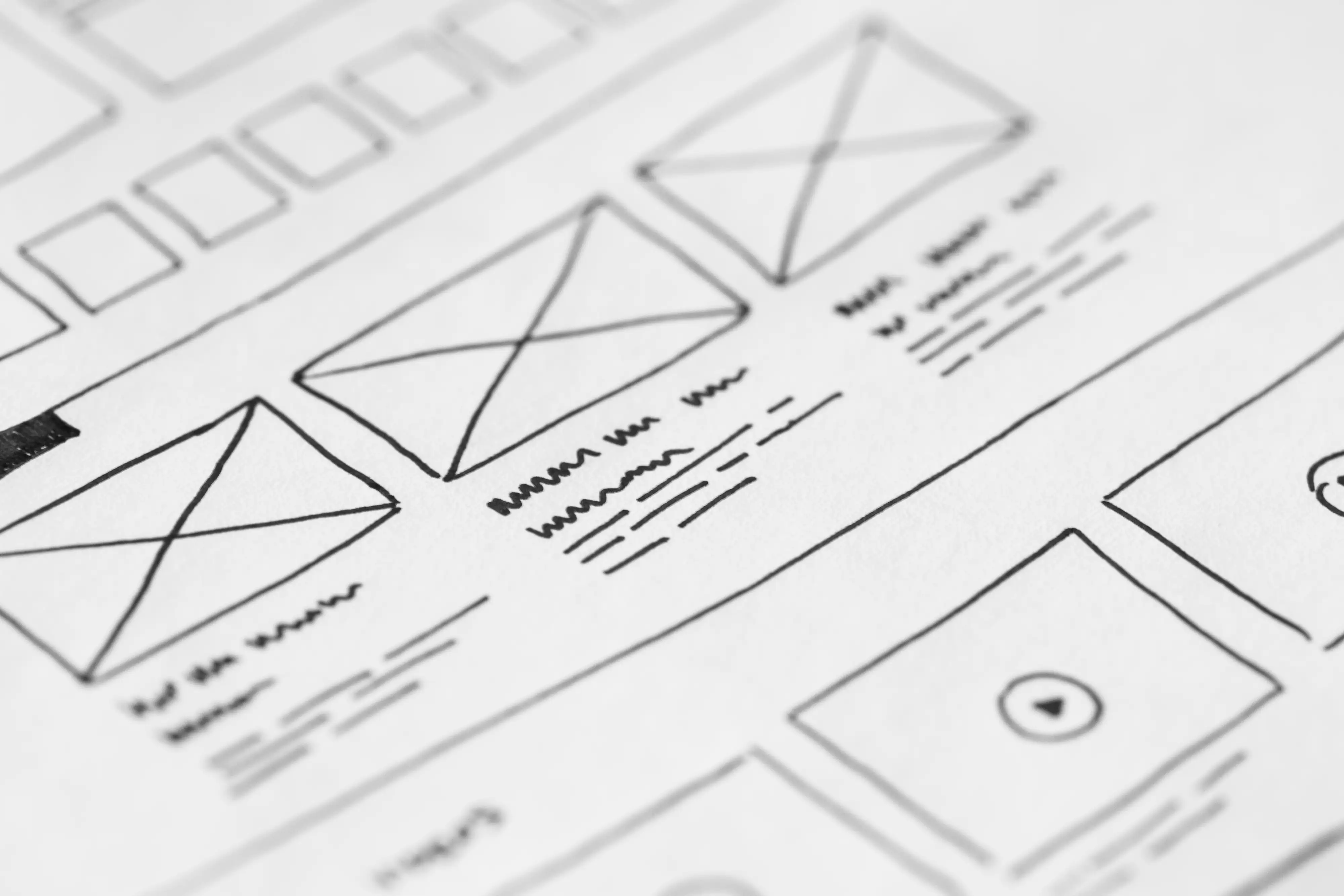
Use AI for the wireframe. Do not confuse the wireframe with the finished asset. The rest of this guide covers the seven layers AI skips.
.co.ke versus .ke versus .com: the ownership decision
A .co.ke gives Kenyan searchers a local signal and costs between KES 899 and KES 1,500 in year one at most registrars. A bare .ke is shorter but sits closer to KES 2,999–3,500 on registration and renewal. A .com runs KES 1,100–1,600 at renewal.
The number that matters is renewal, not registration. Truehost advertises .co.ke at KES 299 for the first year, then KES 1,500 annually. Novahost lists KES 1,160 registration and KES 1,250 renewal. Safaricom Cloud lists .co.ke at KES 1,160 per year. If you budget KES 299 and the renewal arrives at KES 1,500, the domain suddenly looks expensive.
Ownership is the other trap. Register through a KENIC-accredited registrar, and confirm that the WHOIS registrant is your business, not the developer or the host. If the registrant field shows someone else’s name, you do not control the asset. Transferring it later requires cooperation you may not get.
Read the full breakdown on domain registration and ownership in Kenya , or talk to us about domain recovery and migration .
Hosting in Kenya versus cloud hosting: latency and M-Pesa billing
Local hosting is not patriotism. It is physics. Independent tests put Nairobi to Johannesburg latency at 50–80ms, versus 200ms+ for European servers. For a Kenyan audience on 4G, that difference shows up in page load time, form abandonment, and mobile checkout completion.
HostAfrica operates African data centre infrastructure, including Nairobi and Johannesburg, and accepts M-Pesa. Truehost runs Kenyan servers and accepts M-Pesa. International hosts like Hostinger and Namecheap do not accept M-Pesa directly and rely on global servers plus a CDN. If your billing workflow is M-Pesa, a local host removes one entire payment problem.
Hosting price is not the deciding factor. A KES 2,500 annual shared plan can host a brochure site. A business that takes payments, runs bookings, or depends on Google leads needs a host that supports SSL, daily backups, staging environments, and a support team in your time zone.
See our web development and hosting setup service for the stack we deploy for Kenyan SMEs.
CMS decision: WordPress, Next.js, or a hosted builder
AI builders produce a closed page. A CMS produces an asset you can edit, extend, and move. The right CMS depends on who updates the site and how hard the site works.
WordPress wins for content-heavy sites where non-technical staff manage pages, blogs, and WooCommerce catalogues under roughly 10,000 products. It has the largest Kenyan developer pool, mature M-Pesa plugins, and a visual editor your team can learn in a day.
Next.js wins for performance-critical sites, custom portals, booking flows, and businesses where SEO is the primary acquisition channel. Benchmarks on Nairobi 4G show well-built Next.js sites loading in 0.8–1.5s LCP, against 2.5–4s for a well-built WordPress site. The trade-off is content editing: pure Next.js needs a developer unless paired with a headless CMS.
Avoid proprietary AI builders for anything you intend to grow. Migration cost from a closed builder often exceeds the original build cost. Choose a CMS you can export from.
Business email: why your AI-built site still lands in spam
A website and an email address are separate systems. AI builders generate the site. They do not configure SPF, DKIM, and DMARC records, and they do not warm a sending domain. Without those records, quotations, invoices, and password resets land in spam or get rejected outright.
Kenyan SMEs also face a data protection question here. Gmail and Microsoft 365 host email outside Kenya, which counts as a cross-border transfer under the Data Protection Act. That is lawful with appropriate safeguards, typically a data processing agreement and a privacy notice disclosure. The mistake is assuming “it’s just Gmail” removes the obligation. It does not.
We configure business email with authentication, domain verification, and the paperwork that keeps it compliant. See email setup and deliverability .
M-Pesa integration: where AI checkouts break
Adding M-Pesa to an existing WooCommerce or WordPress site starts around KES 15,000 for STK Push checkout with callback handling and failed-transaction paths. Integrating M-Pesa into a custom POS, ERP, or booking system starts around KES 45,000 because reconciliation logic is harder.
The failures are predictable. Safaricom posts the payment result to your callback URL asynchronously. If your server is slow, behind an aggressive firewall, or returns the wrong response code, the customer is debited and the order never marks paid. Customers who tap twice without idempotency get double-charged. Sandbox credentials change on go-live, so integrations that were never tested against production behaviour break on day one.
AI builders do not handle callback reconciliation. They generate a checkout button. They do not build the ledger that matches a Paybill entry to a fulfilled order.
<?php
        // Minimal idempotency guard before firing STK Push.
        // Prevents double-charging when a customer taps twice.
        $idempotencyKey = hash('sha256', $phone . $orderId . $amount);

        if (Cache::has('stk:' . $idempotencyKey)) {
            return response()->json(['error' => 'Request already processed'], 409);
        }

        Cache::put('stk:' . $idempotencyKey, true, now()->addMinutes(5));

        // Proceed with Daraja STK Push request.
        ?>
For the full integration sequence, read M-Pesa Daraja STK Push integration for Kenyan businesses .
Data Protection Act and cross-border data transfer
If your website has a contact form, newsletter signup, checkout, user accounts, or analytics cookies that log IP addresses, you are processing personal data under Kenya’s Data Protection Act 2019. Registration with the Office of the Data Protection Commissioner (ODPC) is mandatory unless you meet the exemption thresholds. The ODPC has signalled fines of up to KES 5 million for non-compliance.
Hosting and email add a second layer. Any personal data stored or processed outside Kenya is a cross-border transfer. That includes cloud hosting, foreign SaaS tools, and overseas email providers. Transfers are lawful with adequate protection or appropriate safeguards, usually contractual data-protection clauses with the provider and a disclosure in your privacy notice.
The practical fix is documentation, not avoidance. Map your tools, get data processing agreements, and state transfers in your privacy notice. We build this into every site we launch. See data analytics and compliance setup .
Website maintenance: the KES line most founders miss
A website is software. Software needs updates, backups, security monitoring, and performance checks. Without maintenance, plugins fall behind, page speed drops, forms break silently, and rankings slip.
Basic maintenance in Kenya runs KES 2,500–8,000 per month for brochure sites. Growth plans with SEO reporting run KES 10,000–18,000. E-commerce plans with checkout monitoring run KES 15,000–30,000. A hacked WordPress site costs KES 50,000–150,000 to clean and restore, before lost revenue during downtime.
AI builders do not include maintenance. Some bundle hosting and call it support. Ask what happens when a plugin update breaks the checkout, or when the SSL certificate expires on a Friday evening.
Review our website maintenance plans and pricing for the exact scope we cover.
Full cost matrix: AI builder versus expert build
The table below compares three common paths for a Kenyan SME. Figures are 2026 market ranges in KES and exclude content creation and photography.
| Cost line | AI builder (self-serve) | WordPress expert build | Next.js custom build |
|---|---|---|---|
| Upfront build | KES 0–15,000 subscription | KES 150,000–300,000 | KES 250,000–500,000 |
| Domain (.co.ke, year one) | KES 299–1,500 | KES 299–1,500 | KES 299–1,500 |
| Hosting per year | Bundled, limited | KES 2,500–12,000 | Free tier or KES 8,000 VPS |
| M-Pesa integration | Not included | KES 15,000+ | KES 45,000+ |
| Email authentication and setup | Not included | KES 10,000–25,000 | KES 10,000–25,000 |
| Monthly maintenance | Not included | KES 2,500–18,000 | KES 5,000–15,000 |
| Migration cost if you outgrow it | High, closed platform | Low, standard CMS | Low, owned codebase |
| AI and search citation readiness | Weak | Strong with SEO layer | Strongest with custom schema |
What breaks after launch, and how to prevent it
Callback duplication. A customer taps twice and is billed twice. Fix with an idempotency key on every STK Push request, stored for at least five minutes.
STK Push timeouts during Safaricom maintenance windows. The prompt never reaches the phone. Fix with explicit timeout handling, a retry path that does not double-charge, and a USSD or Paybill fallback.
Intermittent connectivity causing double form submissions. A slow network resubmits the contact form. Fix with server-side duplicate detection and a visible success state.
SSL expiry and mixed-content warnings. The padlock disappears and browsers warn visitors. Fix with automated renewal monitoring and a monthly SSL check.
Data subject access requests under the DPA. A customer asks what data you hold. Fix with a documented data map and a response process, not an ad-hoc email search.
Plugin abandonment. A critical plugin stops receiving security patches. Fix with a quarterly plugin audit and a replacement plan before abandonment becomes an incident.
InsightForge verdict
AI is the right tool for the first hour. It is the wrong tool for the last mile. A Kenyan business that needs to take M-Pesa, send quotations from a branded email, appear in AI search results, and stay compliant under the Data Protection Act needs a human who has shipped that stack before.
For a Nairobi SME launching for the first time, we recommend a WordPress build on local hosting with native Daraja integration and configured email authentication. It balances cost, editability, and the Kenyan developer pool. For a business where speed and custom workflows are the product, a Next.js build with a headless CMS is the better 24-month decision.
InsightForge has built and maintained these stacks for Kenyan clients in services, retail, and logistics. We do not sell a template. We sell the launch, the integration, and the maintenance that keeps it working. Start with our pricing page , meet the team, or book a 20-minute stack review . If you want the wider context on AI visibility, read GEO for Kenyan SMEs .
FAQ: website for business in Kenya
- Can I use an AI website builder for my Kenyan business?
- Yes for a first draft or a holding page. No for a site that takes M-Pesa, sends branded email, or needs Data Protection Act compliance without manual fixes.
- Is .co.ke better than .ke for a Kenyan business?
- .co.ke is cheaper and signals local relevance. .ke is shorter but costs roughly KES 3,000–3,500 per year. Most SMEs should start with .co.ke.
- How much does M-Pesa integration cost in Kenya?
- From about KES 15,000 for WooCommerce or WordPress STK Push. Custom POS, ERP, or booking integrations start around KES 45,000.
- Do I need website maintenance if I use a local host?
- Yes. Hosting keeps the server online. Maintenance updates plugins, tests backups, monitors SSL, and fixes forms. Budget KES 2,500–8,000 monthly for a basic site.
- Is my AI-built website GDPR or DPA compliant?
- Unlikely by default. Contact forms, analytics, and foreign email hosting create obligations under Kenya’s Data Protection Act. You need a privacy notice, data map, and processing agreements.
This is the short version. For the full technical and commercial breakdown, explore our web development service , our AI automation work , and our 2026 website cost guide . For the regulator’s position on data protection, read the ODPC guidance. For M-Pesa developer documentation, use the Safaricom Daraja portal.